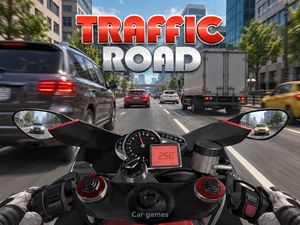
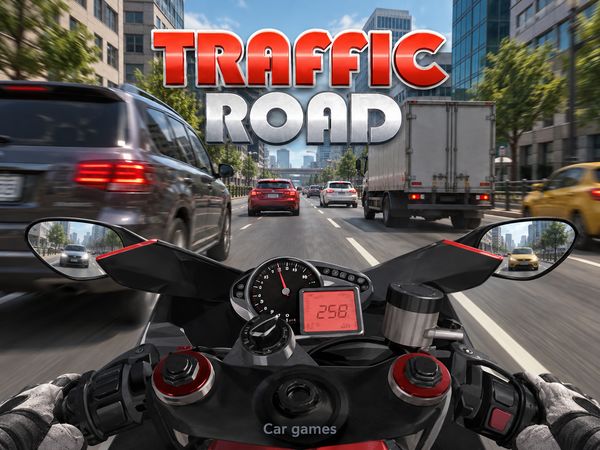
Traffic Road puts you behind a motorcycle at highway speed, where quick lane changes and head checks decide every close pass. The first-person view makes traffic feel immediate. Cars fill your path quickly, and one poor move can end a strong run.
Use the arrow keys to drive, then press Q or E to check your blind spots. That small extra view changes how you merge through crowded lanes. Choose a one-way or two-way road setup, then adjust your approach as traffic becomes harder to read.
Traffic Road runs directly in the browser through Unity WebGL. It delivers smooth 3D road action without needing high-end hardware. Start playing Traffic Road online now and test whether careful riding or bold overtakes carry you farther.
Mastering the Traffic Road Controls
Keyboard Navigation
Traffic Road keeps its main controls simple. Use the ARROW KEYS to drive your motorcycle. These keys handle your movement through the lanes, so keep your fingers ready for small corrections instead of wild swerves.
Use the up arrow when you need to build speed. Ease your movement when a vehicle blocks the lane ahead. A light touch gives you more time to read gaps, while a sudden change can send the bike toward another car. Start each run by learning how quickly the motorcycle reacts to your input.
Steering works best when you plan one lane at a time. Pick the next safe opening, then guide the bike toward it. Do not chase every gap you see. Some openings close before you reach them, especially when traffic bunches together.
The key advantage comes from the extra view controls. Press Q to look left, or press E to look right. Your motorcycle keeps moving forward while you check that side. This lets you inspect a blind spot before you commit to a merge.
Try a short head turn before moving across a lane. If the side view shows a nearby vehicle, hold your line and wait. If the space stays clear, steer smoothly and return your attention ahead. This rhythm prevents rushed moves and makes the keyboard feel far more precise.
Practice the controls on a quiet stretch first. Then combine forward movement, steering, and a quick Q or E check. Expert riding does not mean constant input. It means making small decisions before traffic forces them on you.
Visual Awareness
The first-person motorcycle view limits what you can see at once. Keep your eyes on the road ahead, but use Head-Turn Awareness before every risky merge. Press Q for the left side and E for the right side.
Look for the position of nearby cars, not just open pavement. A gap may appear clear ahead while another vehicle sits beside you. Check the side, choose your route, then steer with purpose. These brief views help you plan lane changes safely through dense traffic.
Do not hold a head turn longer than needed. Forward traffic still moves during the check. A quick glance gives useful information without leaving the road ahead unnoticed.
Motorbike Upgrades and Customization
Improving Performance
Highway success gives you currency for the garage. Spend it with a clear goal instead of raising every stat at random. Traffic Road lets you improve top speed, handling, and braking power, and each choice changes how the motorcycle behaves.
Top speed helps you cover road faster. It also reduces the time available to read traffic. Choose it when you already make clean lane decisions. A faster bike rewards confidence, but it punishes late reactions.
Handling gives you tighter control between vehicles. This upgrade helps when a gap narrows or a car drifts across your path. Better handling does not replace good timing. It gives your steering more room to correct a mistake.
Braking power matters when traffic suddenly slows. A cluster of cars can remove your forward route in seconds. Stronger brakes give you a better chance to reduce speed before reaching the blockage. Watch several vehicles ahead, then brake early rather than waiting for the nearest car.
Build around your riding style. Careful riders may value braking first, while confident players may prefer handling for close gaps. Save higher improvements for runs where you can use them well. A powerful motorcycle still needs calm inputs and clear sight lines.
Test each change on familiar road sections. Notice how soon the bike slows, how sharply it turns, and how quickly it reaches speed. Then adjust your lane choices around those traits. The best setup supports your decisions instead of encouraging reckless moves.
Unlocking New Rides
Traffic Road also includes unlockable motorcycles with different looks and base stat profiles. Treat each new ride as a change in handling style, not only a visual upgrade. Some bikes suit straight roads and higher speed, while others favor agility in busy traffic.
Save currency for a bike that matches your goal. A speed-focused ride can raise your scoring potential, but it also makes gaps arrive sooner. An agile motorcycle gives you more control when traffic becomes chaotic. Try to match the bike with the road setup you understand best.
New rides add another reason to refine your technique. Learn their response before attempting your longest runs. Familiar controls still matter, but each bike may demand different timing.
Survival Tactics for Busy Highways
Lane Positioning
Stay near the center lines when traffic grows heavy. This position gives you an escape route on either side. You can shift left or right as cars change speed, instead of waiting for one narrow opening beside the shoulder.
The shoulder creates a trap. A slow van or another vehicle may leave you with nowhere to move. Keep some space available whenever possible. Center positioning also helps you respond to traffic several cars ahead, rather than reacting only when the nearest vehicle brakes.
Look beyond the first car. Watch groups, gaps, and changing speeds across the road. If several vehicles begin closing together, prepare your next move early. A gentle lane change usually beats a sharp dodge at the last moment.
Use one-way roads to practice this habit. Keep your path smooth and avoid weaving without a reason. Every movement should create a safer route, not simply chase a faster one. On a two-way setup, leave yourself even more space because opposing vehicles can remove an escape route quickly.
Protect the run before chasing extra speed. Contact with another vehicle ends the attempt immediately. A steady line through traffic often produces a better distance than constant lane-splitting. Choose a gap you can exit, not just one you can enter.
Handling Oncoming Traffic
Two-way roads demand tighter timing because opposing vehicles approach at speed. Enter the oncoming lane only when you can see a clear gap. Watch the headlights of approaching vehicles and judge how quickly that space closes.
Plan the return before you move out. Take the opening, pass safely, then guide the motorcycle back toward the safe lane. If no exit exists, skip the overtake. One risky pass can erase the whole run.
Practice short moves first. Two-way traffic is the hardest challenge, so patience matters more than constant speed.
Ready for a tougher run? Try Traffic Road here and put these lane habits into practice.
How a Traffic Road Run Ends
Collision Consequences
Traffic Road treats contact as a serious mistake. Hit a car, truck, or environmental obstacle, and the current run stops immediately. The game does not give you a health bar to absorb several errors.
That rule changes how you approach crowded roads. A gap that looks barely wide enough may not justify the risk. Slow down, check your route, and leave room for a correction. The goal is not simply to pass the next vehicle. It is to keep the motorcycle moving without touching anything.
A crash also ends the progress built during that attempt. Your distance stops, and the run is over. Use each failure to identify the decision that caused it. Maybe you changed lanes without a Q or E check. Maybe you waited too long to brake. Fix that one habit on the next attempt.
Conservative riding works well for long records. Keep your line stable, read traffic early, and take only gaps with a clear exit. Speed matters, but survival protects every second you have already earned.
Mission Failure States
Time-limited objectives add another way to lose. Reaching the finish before the clock expires requires a steady average speed, not endless risky overtakes.
Keep moving when the road opens, then protect your run when traffic tightens. A crash ends the attempt, while a slow section can cost the timer. Balance both pressures with early braking, clean merges, and controlled bursts of speed.
Compare with Similar Games
| Game |
Why Similar |
| Infinite Highway |
Objective: Drive as far as possible on a multi-lane road while avoiding collisions with AI-controlled traffic. |
| Traffic Jam 3D |
Objective: Reach specific distance checkpoints within a time limit while navigating through high-speed highway traffic. |
✨ Key Features of Traffic Road
- First-person motorcycle perspective
- One-way and two-way traffic options
- Unlockable bikes and performance upgrades
- Dynamic highway environments
How to Play Traffic Road
Step 1: Use the game controls
Use ARROW KEYS to drive. Use Q to look to the left. Use E to look to the right.
Step 2: Accelerate and Steer
Use the Arrow Keys to speed up and move between lanes to avoid slower-moving cars.
Step 3: Collect Rewards
Earn points and currency based on your distance and successful maneuvers during the run.
Traffic Road FAQs
Can I play Traffic Road on mobile devices?
Traffic Road opens in a phone browser, but it is played with the keyboard, so a computer works best.
Is there a Traffic Road 2?
No. Traffic Road 2 has not been released — Traffic Road is the newest game in the series.
What are the basic controls for Traffic Road?
Browser keyboard: ARROW KEYS — drive; Q — look to the left; E — look to the right.
Do I need to download Traffic Road?
No. Traffic Road runs in your browser on this page, with nothing to download or install.
Conclusion
Traffic Road delivers an engaging singleplayer motorcycle traffic racing experience built around awareness and careful decision-making. Its standout Head-Turn Awareness mechanic lets you look left with Q or right with E while maintaining forward momentum, making it easier to check blind spots and plan lane changes safely in dense traffic.
Drive with the arrow keys and stay focused as you manage the road from the rider’s perspective. The combination of direct keyboard controls, traffic awareness, and a distinctive head-turning system gives Traffic Road a satisfying sense of control without unnecessary complexity. If you enjoy motorcycle racing that rewards attention and smart movement, play Traffic Road here on this page.

No comments yet. Be the first to share your thoughts!